
+918042755689

Currently it only shows your basic business info. Start adding relevant business details such as description, images and products or services to gain your customers attention by using Boost 360 android app / iOS App / web portal.
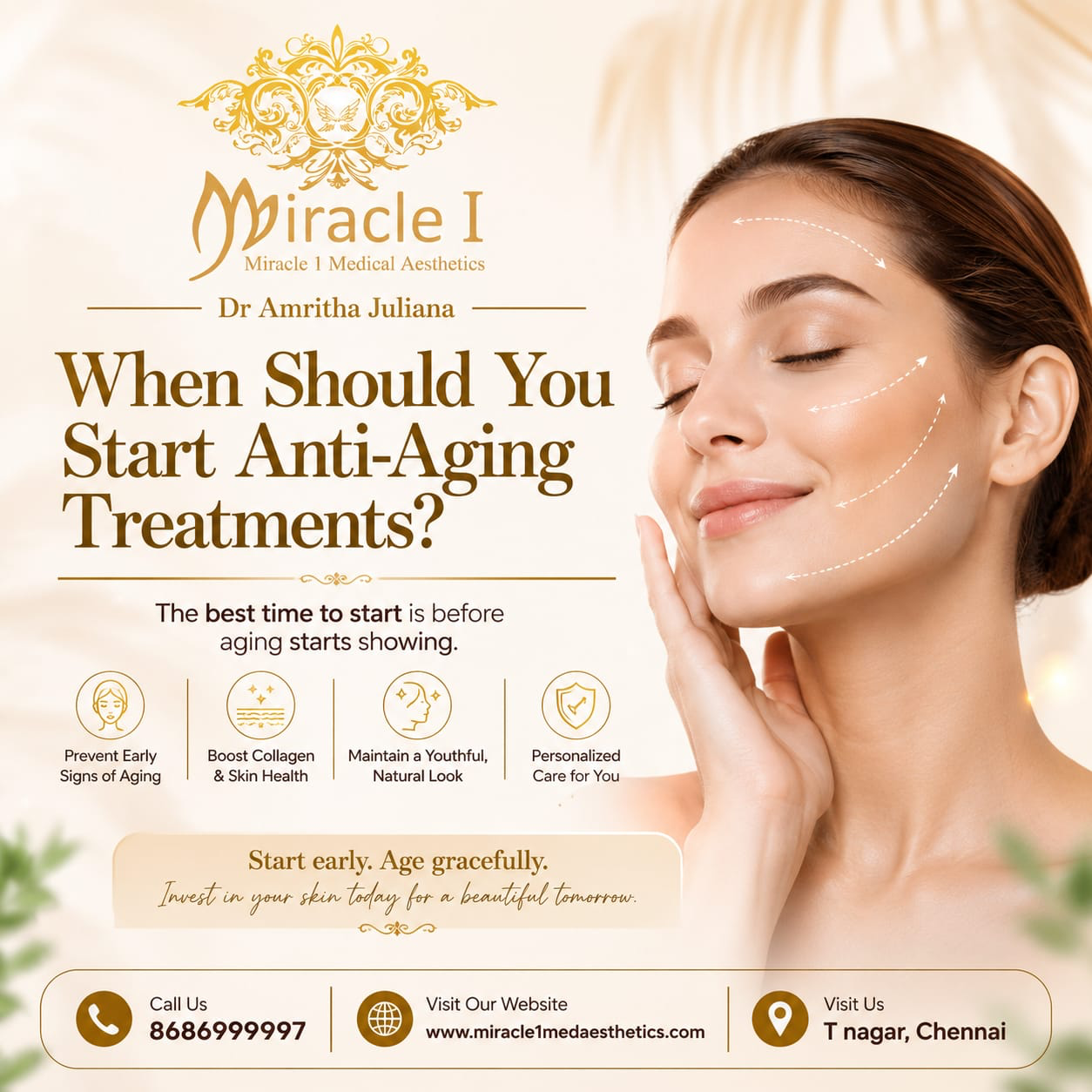
One of the most common questions patients ask at Miracle1 Medical Aesthetics is, “At what age should I start anti-aging treatments?” According to Dr. Amritha Juliana, anti-aging treatments are not just for people in their 40s or 50s. In many cases, prevention and early intervention can help maintain youthful, healthy skin for longer. Modern aesthetic medicine focuses on both preventing and correcting visible signs of aging. Understanding how the skin changes over time can help you decide when professional treatments may be beneficial. How Does Skin Age? Skin aging is a natural process influenced by genetics, lifestyle, and environmental factors. As we age, collagen, elastin, and hyaluronic acid production gradually decreases, leading to reduced firmness, elasticity, and hydration. According to Dr. Amritha Juliana, common factors that accelerate skin aging include: Sun exposure Pollution Smoking Stress Poor sleep Poor nutrition Repeated facial expressions Over time, these can contribute to fine lines, wrinkles, pigmentation, uneven texture, and volume loss. Anti-Aging in Your 20s: Focus on Prevention Most people in their 20s do not require corrective anti-aging procedures. However, this is the ideal time to build healthy habits that help delay visible aging. At Miracle1 Medical Aesthetics, Dr. Amritha Juliana recommends: Daily sunscreen use Consistent skincare routines Adequate hydration Healthy lifestyle choices Periodic professional skin assessments Preventive treatments such as Hydrafacial, gentle chemical peels, and skin hydration therapies can help maintain skin quality and radiance. Anti-Aging in Your 30s: Early Intervention The first signs of aging often appear during the 30s. Fine lines, mild pigmentation, and reduced skin brightness may become noticeable. Dr. Amritha Juliana explains that supporting collagen production at this stage can help maintain youthful skin. Common options include: Medical-grade facials Chemical peels Microneedling Skin boosters Collagen-stimulating treatments Early intervention may reduce the need for more intensive treatments later. Anti-Aging in Your 40s and Beyond By the 40s and 50s, collagen loss becomes more pronounced. Wrinkles may deepen, skin elasticity may decrease, and facial volume changes can become more visible. At Miracle1 Medical Aesthetics, treatment plans are often designed to: Improve skin firmness Restore hydration Enhance texture Address pigmentation Support collagen regeneration A personalized combination approach often provides the most natural-looking results. Is There a Right Age to Start? There is no universal age for anti-aging treatments. According to Dr. Amritha Juliana, the right time depends on your skin condition, genetics, lifestyle, and personal concerns. Some people notice early signs of aging in their late 20s, while others may not experience significant changes until much later. Rather than focusing on age alone, it is important to evaluate the health and needs of your skin. Final Thoughts The best time to start anti-aging treatments is often before significant signs of aging develop. Preventive care in your 20s and 30s, combined with healthy lifestyle habits and professional guidance, can help maintain long-term skin health. At Miracle1 Medical Aesthetics, Dr. Amritha Juliana believes that anti-aging is not about changing your appearance—it is about preserving healthy, confident skin at every stage of life. A personalized approach can help you achieve natural, refreshed, and age-appropriate results for years to come.


