
+918042755689

Currently it only shows your basic business info. Start adding relevant business details such as description, images and products or services to gain your customers attention by using Boost 360 android app / iOS App / web portal.
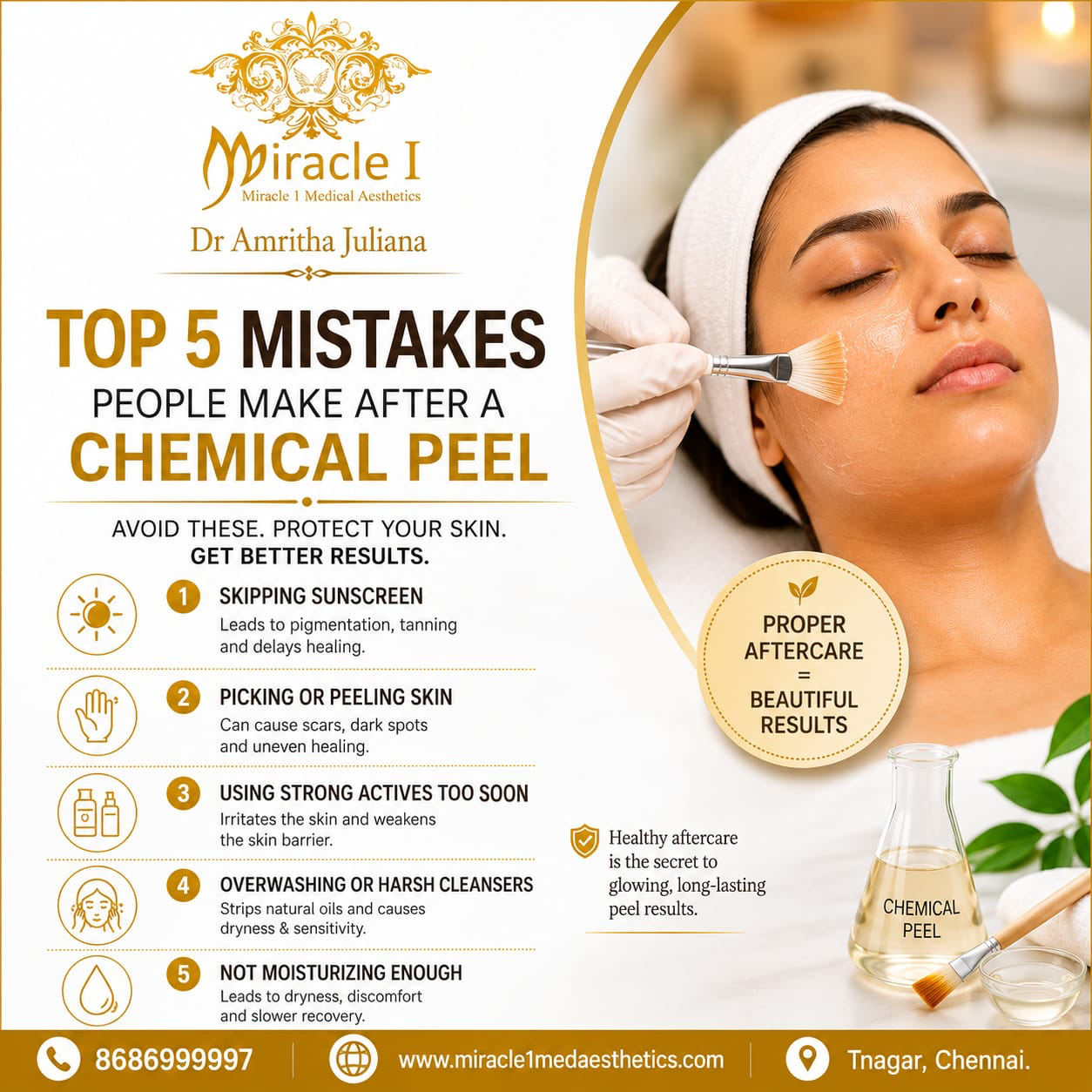
Chemical peels are one of the most effective aesthetic treatments for improving acne marks, pigmentation, uneven skin tone, dullness, and early signs of aging. By gently exfoliating damaged outer layers of skin, chemical peels help reveal fresher, smoother, and healthier-looking skin underneath. According to Dr Amritha Juliana, many patients focus only on the treatment itself and underestimate the importance of post-procedure care. Proper aftercare plays a major role in achieving safe healing and long-lasting results. However, the results of a chemical peel do not depend only on the procedure itself — post-treatment care plays an equally important role. Many people unknowingly make mistakes during the healing period, leading to irritation, prolonged redness, breakouts, or even post-inflammatory pigmentation. Here are the top 5 mistakes people commonly make after a chemical peel and how to avoid them. 1. Skipping Sunscreen After a Chemical Peel One of the biggest mistakes after a chemical peel is not using sunscreen consistently. After a peel, your skin becomes more sensitive to sunlight because the protective outer layer has been exfoliated. Even brief sun exposure can trigger tanning, pigmentation, redness, and irritation during the healing phase. “As the skin barrier is temporarily more delicate after a peel, UV protection becomes extremely important, ” explains Dr Amritha Juliana. What You Should Do: Use a broad-spectrum sunscreen with SPF 30 or higher Reapply every 2–3 hours if outdoors Wear protective clothing, caps, or umbrellas when possible Avoid direct sun exposure during peak afternoon hours Proper sun protection is essential for maintaining your peel results and preventing unwanted pigmentation. 2. Peeling or Picking Flaky Skin As the skin renews itself after a chemical peel, mild peeling or flaking is completely normal. Many people try to speed up the process by pulling, scrubbing, or picking at the peeling skin. Unfortunately, this can damage healing skin underneath and may lead to: Dark spots Uneven healing Scarring Skin sensitivity Dr Amritha Juliana advises patients to allow the skin to shed naturally without forcing the peeling process. What You Should Do: Be gentle while washing your face and avoid exfoliating scrubs, facial brushes, or harsh towels during recovery. Patience is important — healthy healing gives the best results. 3. Using Strong Skincare Ingredients Too Soon Many active skincare ingredients can irritate freshly peeled skin. Using products too early after a chemical peel can weaken the skin barrier and cause burning, redness, or excessive dryness. Avoid Immediately After a Peel: Retinol and retinoids AHAs and BHAs Vitamin C serums Physical exfoliators Strong acne treatments “Overloading freshly treated skin with strong actives is one of the most common reasons for post-peel irritation, ” says Dr Amritha Juliana. What You Should Do: Stick to a simple skincare routine with: Gentle cleanser Barrier-repair moisturizer Sunscreen Dr Amritha Juliana will guide you on when to safely restart active ingredients based on your skin type and peel strength. 4. Overwashing or Using Harsh Cleansers After a chemical peel, the skin becomes temporarily delicate and more reactive. Washing the face too frequently or using foaming, fragranced, or harsh cleansers can strip away natural moisture and worsen irritation. Common Signs of Over-Cleansing: Tightness Burning sensation Excessive dryness Redness According to Dr Amritha Juliana, maintaining a gentle skincare routine during the recovery phase helps the skin heal more comfortably and evenly. What You Should Do: Use a mild, non-irritating cleanser and wash your face with lukewarm water only. Avoid hot water, steam facials, or aggressive rubbing for several days after treatment. Keeping the skin calm and hydrated helps support proper healing. 5. Not Moisturizing Enough Hydration is essential after a chemical peel. When the skin barrier is healing, moisture loss increases significantly. Neglecting moisturization can lead to discomfort, prolonged peeling, and increased sensitivity. What You Should Do: Use a dermatologist-recommended moisturizer that is: Fragrance-free Barrier-repairing Non-irritating Apply moisturizer regularly throughout the day to keep the skin comfortable and protected during recovery. Dr Amritha Juliana emphasizes that healthy hydration supports faster barrier repair and improves overall peel outcomes. When Should You Contact Your Dermatologist? Mild redness, dryness, and peeling are usually expected after a chemical peel. However, you should seek professional advice if you notice: Severe burning Swelling Blisters Pus formation Persistent redness Sudden darkening of skin Early intervention can prevent complications and protect your results. Final Thoughts Chemical peels can deliver excellent improvements in skin texture, acne marks, pigmentation, and overall skin glow when combined with proper aftercare.


