
+918042755689

Currently it only shows your basic business info. Start adding relevant business details such as description, images and products or services to gain your customers attention by using Boost 360 android app / iOS App / web portal.
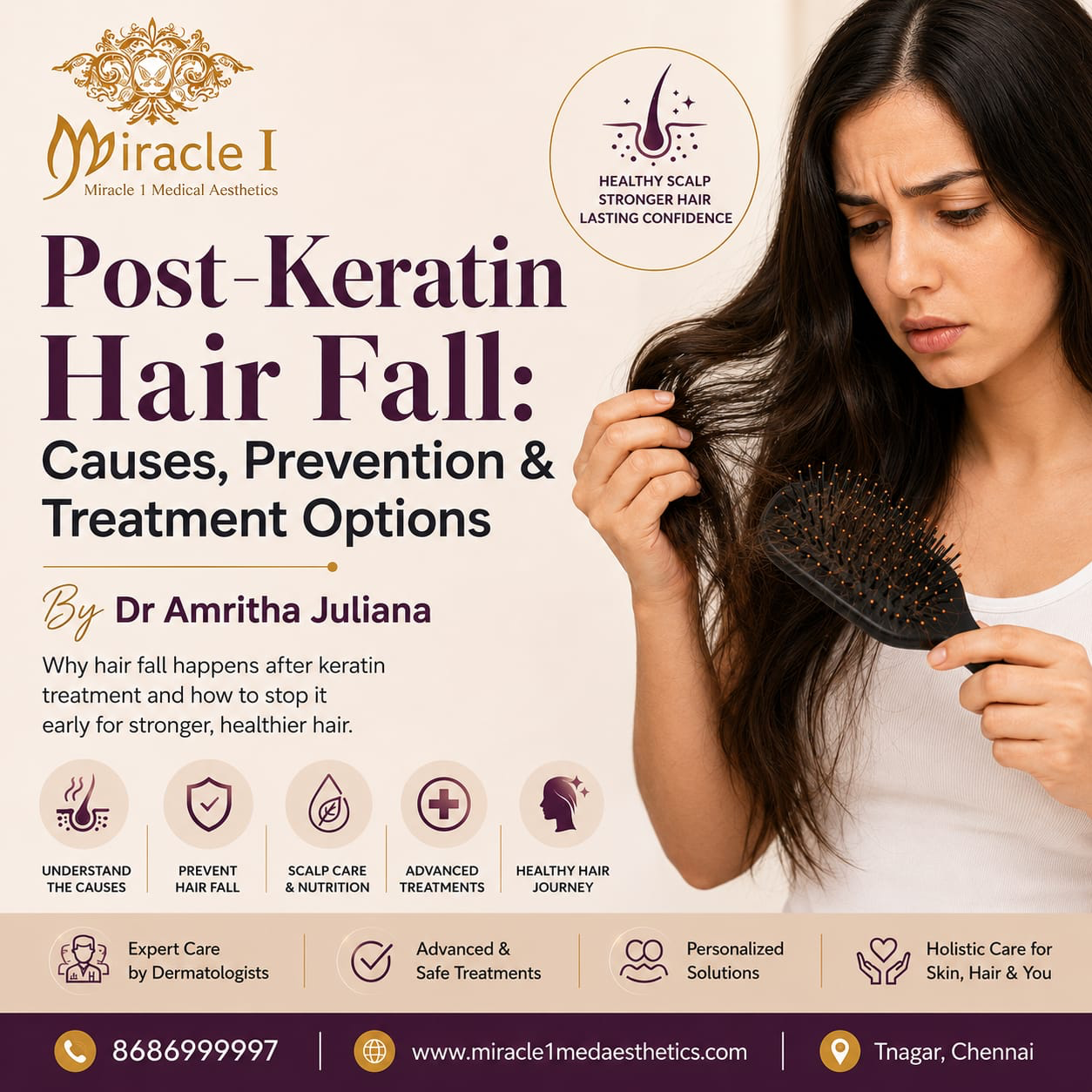
Keratin treatments are popular for transforming frizzy, unmanageable hair into smooth, shiny strands. While many people love the immediate results, some begin noticing increased hair fall weeks or months later. This can be alarming—especially when the hair starts thinning more than usual. But does keratin treatment directly cause hair loss? The answer is more complex than a simple yes or no. What Is a Keratin Treatment? Keratin treatments are salon procedures designed to smooth and straighten hair by coating the hair shaft with proteins and sealing them using heat. The result is softer, shinier, and more manageable hair for several weeks to months. However, repeated treatments, excessive heat, harsh chemicals, and poor aftercare can sometimes affect both the hair shaft and scalp health. Why Does Hair Fall Happen After Keratin Treatments? 1. Heat Damage to Hair Roots Keratin procedures involve intense flat-ironing at very high temperatures. Excessive heat can weaken the hair shaft and make strands more prone to breakage. 2. Chemical Sensitivity Some keratin products contain strong chemicals such as formaldehyde-releasing agents. Sensitive scalps may react with irritation, inflammation, itching, or increased shedding. 3. Hair Shaft Weakening Repeated smoothing treatments can gradually reduce hair elasticity, making hair brittle and prone to snapping. 4. Existing Hair Fall Gets Triggered Many people already have underlying issues such as: Stress-related hair fall Hormonal imbalance Nutritional deficiencies PCOS-related thinning Thyroid disorders The treatment itself may act as a trigger that worsens ongoing hair loss. 5. Scalp Barrier Damage Harsh chemicals and heat can disturb the scalp barrier, leading to dryness, sensitivity, and unhealthy hair growth conditions. How to Prevent Post-Keratin Hair Fall Choose Safer Products Opt for salons that use formaldehyde-free or low-chemical formulations. Avoid Frequent Treatments Repeated keratin sessions too close together can weaken hair over time. Focus on Scalp Health Healthy hair starts from a healthy scalp. Using gentle shampoos and maintaining scalp hydration is important. Reduce Heat Styling Avoid excessive straightening, curling, or blow drying after treatment. Improve Nutrition Hair growth depends heavily on iron, protein, vitamin D, B12, and overall nutrition. Treatment Options for Hair Fall After Keratin The right treatment depends on the cause and severity of hair loss. Scalp & Hair Analysis A professional evaluation helps identify whether the issue is breakage, shedding, hormonal thinning, or scalp inflammation. Medical Hair Therapies Treatments like: GFC (Growth Factor Concentrate) PRP therapy Scalp mesotherapy Prescription medications may help stimulate healthier regrowth. Correcting Nutritional Deficiencies Blood tests may reveal deficiencies contributing to persistent hair fall. Customized Hair Care Routine Using dermatology-approved shampoos, serums, and scalp care products can significantly improve recovery. When Should You See a Doctor? You should seek professional evaluation if: Hair fall continues for more than 6–8 weeks You notice visible thinning or widening of partitions There is itching, burning, or scalp pain Hair becomes extremely dry, weak, or brittle You see sudden excessive shedding after salon procedures Final Thoughts Keratin treatments do not always cause permanent hair loss, but improper procedures, repeated heat exposure, and underlying scalp conditions can contribute to significant shedding and breakage. Early intervention is important. Identifying the root cause and starting the right treatment can help restore both scalp health and hair density before the thinning progresses further. For personalized hair and scalp evaluation, consult a qualified medical professional instead of relying only on salon-based solutions.


