

+918042755689

Currently it only shows your basic business info. Start adding relevant business details such as description, images and products or services to gain your customers attention by using Boost 360 android app / iOS App / web portal.
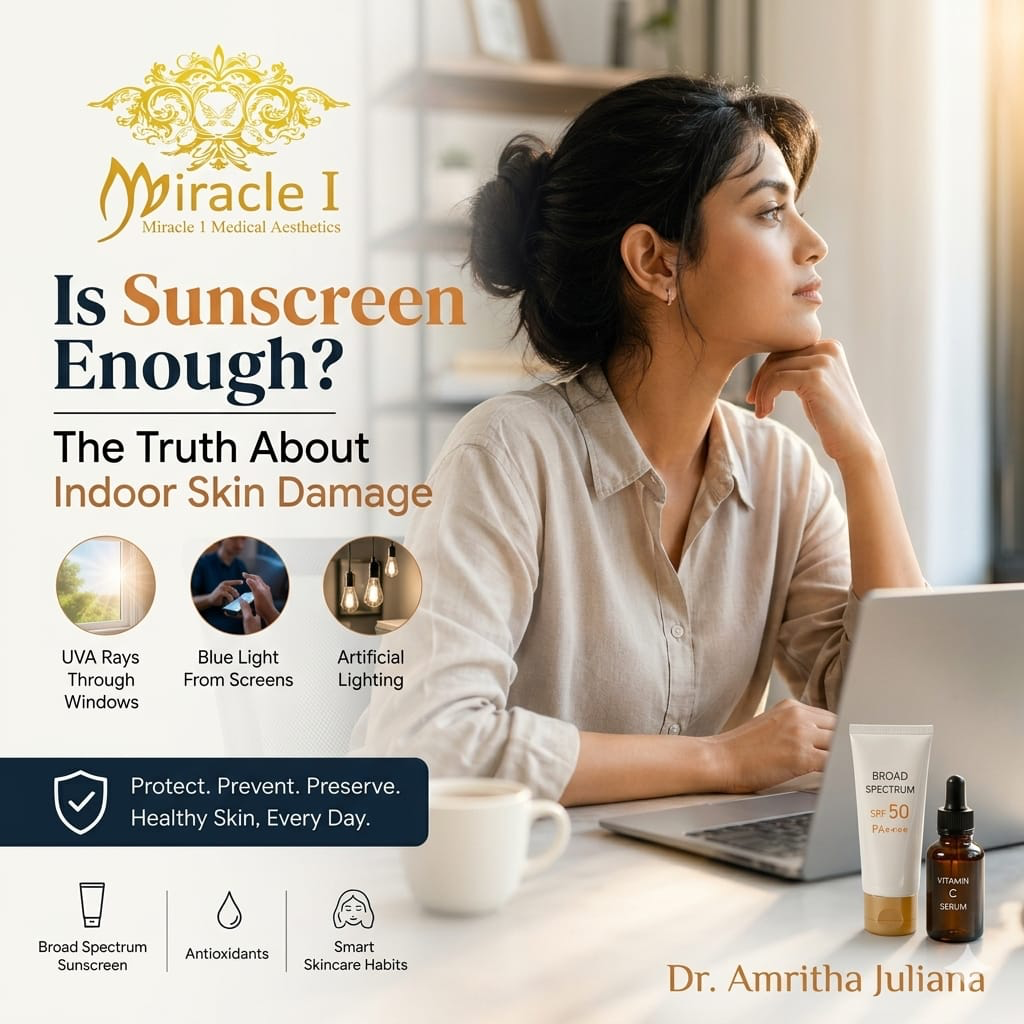
Most people believe sunscreen is only necessary when stepping out in the sun. But what if your skin is getting damaged even while you’re indoors? If you sit near windows, use screens all day, or spend hours under artificial lighting—your skin may still be at risk. Insight from Dr. Amritha Juliana, Founder, Miracle 1 Medical Aesthetics: indoor protection is just as important as outdoor sun care. Let’s break down the truth. ☀️ What Kind of Light Damages Skin Indoors? Even inside your home or office, your skin is exposed to: 1. UVA Rays (Through Windows) Unlike UVB rays, UVA rays penetrate glass easily. These rays: Cause premature aging (wrinkles, sagging) Trigger pigmentation and tanning Break down collagen slowly over time 👉 This means sitting near a window = silent skin damage. 2. Blue Light (From Screens) Phones, laptops, and TVs emit blue light (HEV light). Prolonged exposure may: Worsen pigmentation (especially melasma) Increase oxidative stress Contribute to uneven skin tone 3. Artificial Lighting While less intense, long exposure to LED and fluorescent lights can still contribute to low-level skin stress over time. 🧴 Is Sunscreen Alone Enough? Short answer: Not always. Most regular sunscreens: Protect mainly against UVB (sunburn) Offer some UVA protection But may NOT fully protect against blue light So if you're indoors all day, using just any sunscreen might not be sufficient—especially if you have: Pigmentation Melasma Post-acne marks ✅ How to Fully Protect Your Skin Indoors 1. Use a Broad-Spectrum Sunscreen Choose: SPF 30 or higher PA+++ or PA++++ Gel-based for oily skin, cream-based for dry skin 👉 Apply even if you’re staying indoors! 2. Reapply If Needed If you're near windows → reapply every 3–4 hours If completely away from sunlight → once in the morning may be enough 3. Add Antioxidants Vitamin C serums help: Fight free radical damage Boost sunscreen effectiveness Brighten skin 4. Consider Tinted Sunscreens Tinted sunscreens (with iron oxides): Offer better protection against blue light Are ideal for pigmentation-prone skin 5. Don’t Sit Too Close to Windows Even small changes like: Using curtains Sitting slightly away from direct sunlight can reduce exposure significantly ⚠️ Who Needs Indoor Sun Protection the Most? You should be extra careful if you have: Melasma or pigmentation Sensitive skin Post-laser or chemical peel treatments Acne marks 💡 Final Verdict Sunscreen is essential—but not always enough on its own. Indoor skin damage is real, gradual, and often unnoticed until pigmentation or premature aging appears. The right combination of: ✔ Sunscreen ✔ Antioxidants ✔ Smart habits …is what truly protects your skin. 📍 Expert Tip “If you’re investing in skincare but skipping sunscreen indoors, you’re unknowingly slowing down your results. Protection is the foundation of healthy skin.” — Dr. Amritha Juliana, Founder, Miracle 1 Medical Aesthetics 📞 Concerned About Pigmentation or Dull Skin? Visit Miracle 1 Medical Aesthetics for personalized skin analysis and advanced treatments tailored to your skin type.


