
+918042755689

Currently it only shows your basic business info. Start adding relevant business details such as description, images and products or services to gain your customers attention by using Boost 360 android app / iOS App / web portal.
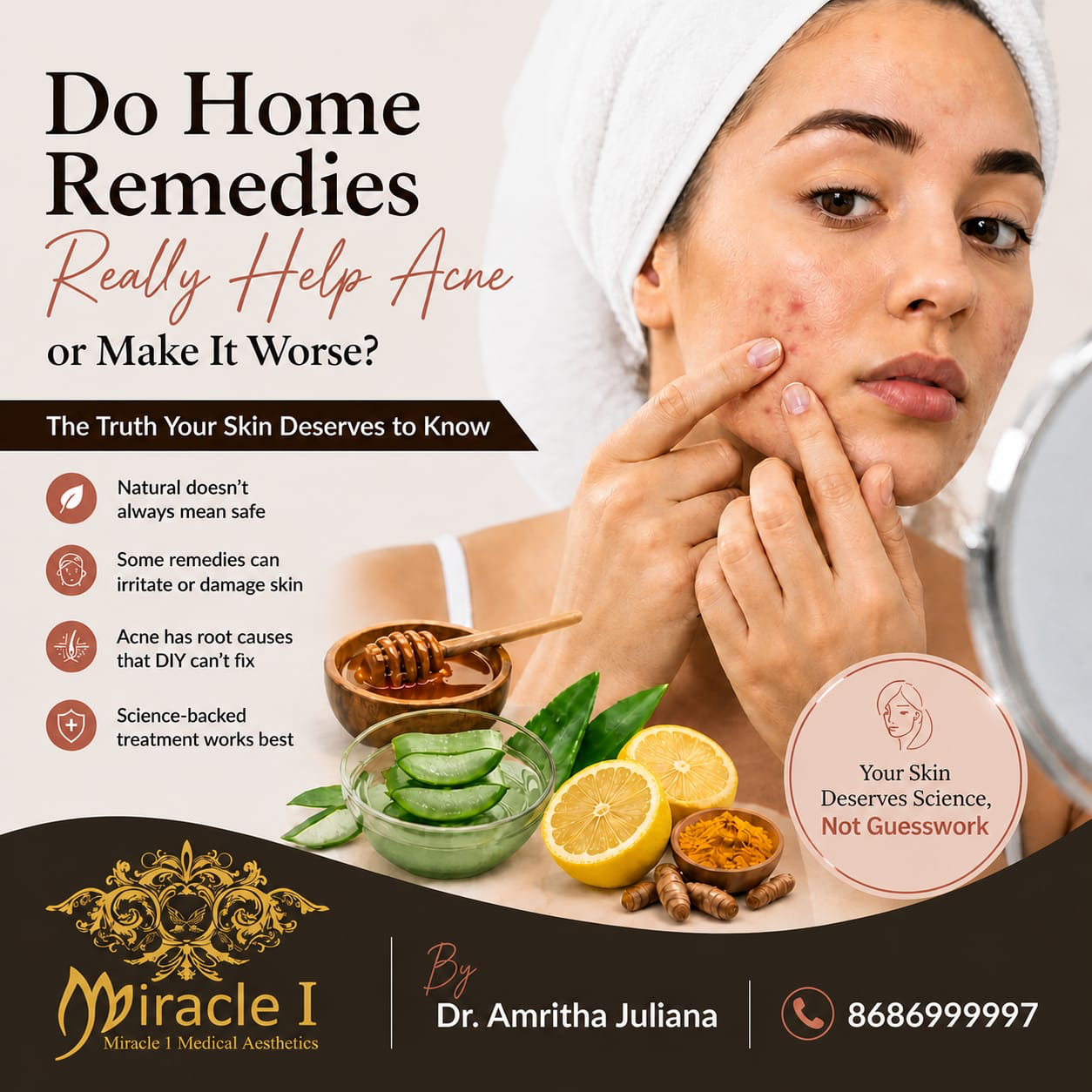
Acne is frustrating. And when it shows up, most people rush to the kitchen before they ever step into a clinic. Turmeric, toothpaste, lemon juice, aloe vera—you’ve probably tried at least one of these. But the real question is: Are home remedies actually helping your acne… or silently making it worse? Let’s break the truth. 🌿 Why Home Remedies Seem to Work Some natural ingredients do have skin benefits: Turmeric – anti-inflammatory Aloe vera – soothing Honey – mild antibacterial So yes, you might notice temporary improvement—less redness, slight calming. As Dr. Amritha Juliana, founder of Miracle 1 Medical Aesthetics, often explains, this initial improvement can be misleading—because it doesn’t address what’s happening beneath the skin. But here’s the problem 👇 👉 These remedies don’t treat the root cause of acne: Excess oil production Clogged pores Bacterial growth Hormonal imbalance So while your skin may look better for a few days, the acne keeps coming back. ⚠️ When Home Remedies Make Acne Worse This is where things get risky. 🚫 Lemon Juice Too acidic Damages skin barrier Can cause burns & pigmentation 🚫 Toothpaste Contains irritants like menthol & peroxide Over-dries skin → triggers more oil production 🚫 Baking Soda Disrupts skin pH Leads to irritation and breakouts 🚫 DIY Scrubs (Sugar, Salt) Cause micro-tears in skin Worsen inflammation 👉 Many patients come to us after trying these—and end up with: More acne Sensitive skin Post-acne pigmentation In clinical practice, Dr. Amritha Juliana, founder of Miracle 1 Medical Aesthetics, frequently sees patients whose acne has worsened due to repeated use of such DIY remedies. 🧠 The Biggest Myth: “Natural = Safe” Just because something is natural doesn’t mean it’s safe for your skin. Your skin has a delicate barrier and pH balance. According to Dr. Amritha Juliana, founder of Miracle 1 Medical Aesthetics, disrupting this balance—even unintentionally—can make acne more persistent and difficult to treat. Random DIY treatments can disrupt both—making acne harder to treat later. 💉 What Actually Works for Acne? Effective acne treatment is targeted and medical-grade, not random. Depending on your skin, you may need: Medical-grade skincare Chemical peels Acne control facials Hormonal evaluation (in persistent cases) The key is: customization. Because acne is not the same for everyone. ✨ When Should You Stop Home Remedies? If you notice: Acne not improving after 2–3 weeks Increased redness or irritation Dark marks after pimples Painful or cystic acne 👉 It’s time to stop experimenting and start treating. As Dr. Amritha Juliana, founder of Miracle 1 Medical Aesthetics, emphasizes—early intervention can prevent long-term skin damage and pigmentation. 💬 Final Takeaway Home remedies may give temporary comfort, but they rarely give real results. In many cases, they delay proper treatment—and make your skin condition worse. Your skin deserves science, not guesswork. 📍 At Miracle 1 Medical Aesthetics We don’t believe in one-size-fits-all treatments. We analyze your skin, identify the root cause, and design a plan that actually works—safely and effectively. 📞 Book your consultation today Let’s treat your acne the right way—before it leaves permanent marks.


