
+918042755689

Currently it only shows your basic business info. Start adding relevant business details such as description, images and products or services to gain your customers attention by using Boost 360 android app / iOS App / web portal.
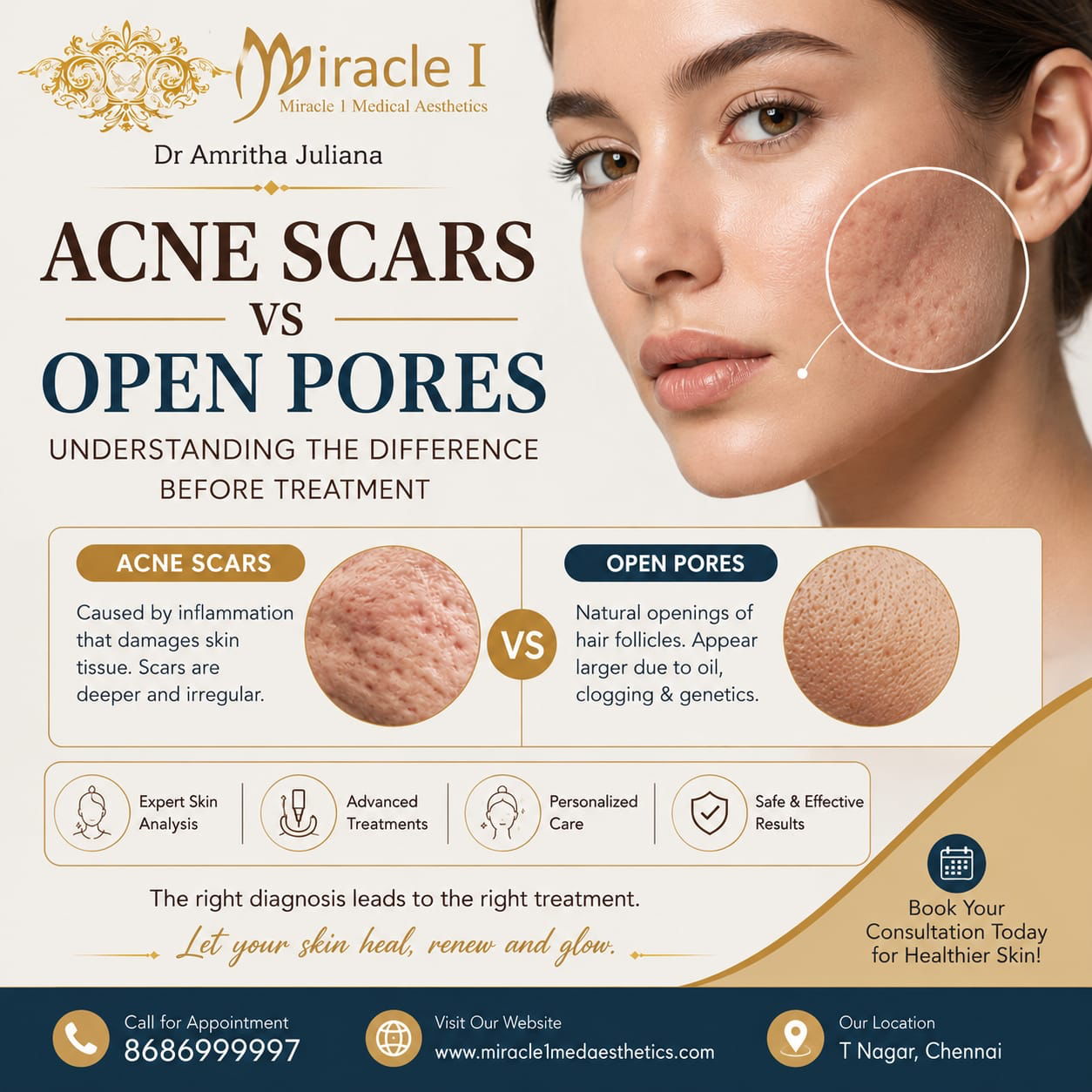
Many people look in the mirror and assume that every texture issue on their skin is caused by “open pores.” In reality, many individuals are actually dealing with acne scars — and confusing the two often leads to choosing the wrong treatments or skincare products. At miracle1, patients commonly visit with concerns about uneven skin texture, enlarged pores, and post-acne marks. According to Dr Amritha Juliana, understanding the exact cause of skin texture changes is the first step toward achieving smoother, healthier-looking skin. What Are Open Pores? Open pores are visible openings on the skin that release oil and sweat. While pores are completely natural, some people notice them more prominently due to oily skin, ageing, or collagen loss. Common Causes of Enlarged Pores Excess oil production Genetics Sun damage Ageing and collagen loss Improper skincare habits Thick or oily skin type Open pores are usually more visible around the nose, cheeks, forehead, and chin. They often appear as tiny dots or shallow depressions, especially under makeup or bright lighting. Dr Amritha Juliana explains that enlarged pores are often linked to oil activity and reduced skin elasticity rather than deep skin damage. What Are Acne Scars? Acne scars develop when inflammation damages the deeper layers of the skin. Unlike open pores, acne scars are caused by structural changes within the skin tissue Common Types of Acne Scars Ice pick scars Boxcar scars Rolling scars Post-acne textural irregularities Acne scars are generally deeper, uneven, and irregular in shape compared to enlarged pores. Treatment Oil control & collagen support Scar remodeling treatments Why Proper Diagnosis Matters Treating acne scars as “open pores” can delay visible improvement. Many pore-minimizing creams may temporarily smooth the skin surface but may not effectively improve deeper acne scars. This is why professional skin assessment becomes important before starting any procedure. At miracle1, Dr Amritha Juliana emphasizes personalized treatment planning based on individual skin texture, scar type, and skin sensitivity. Treatments Commonly Used for Open Pores Depending on skin type and severity, treatments may include: Chemical peels Carbon laser facials Microneedling Medical-grade skincare Collagen-stimulating procedures These treatments help improve skin texture, regulate oil production, and reduce the appearance of enlarged pores. Treatments Commonly Used for Acne Scars Acne scar treatment often requires deeper skin remodeling procedures such as: Fractional laser treatments RF microneedling Subcision PRP-based procedures Combination resurfacing treatments According to Dr Amritha Juliana, the ideal treatment depends on scar depth, skin type, and downtime preferences. Can Someone Have Both? Yes. Many individuals have both enlarged pores and acne scars at the same time, especially those with oily or acne-prone skin. Combination treatment plans often provide the best overall results. Final Thoughts Not every texture concern is simply “open pores.” Acne scars and enlarged pores may appear similar initially, but they require different treatment approaches. A professional consultation can help identify the root cause and guide you toward treatments suitable for your skin goals. At miracle1 in Chennai, advanced skin analysis and customized aesthetic treatments are designed to help patients achieve smoother, healthier-looking skin with medically guided care.


